Home / Blog / Holiday gift guides
Holiday gift guide · Astronomy
Gifts for Amateur Astronomers: What to Buy and What to Skip
Telescopes are easy gifts to get wrong. The box advertises magnification, the tripod wobbles, and by February it lives in a closet. This guide helps you choose something that gets used, whether the person is just curious about the sky or already owns a scope.
Some links lead to specialist sites in our network, which may earn a commission from retailers. How that works.
Quick picks
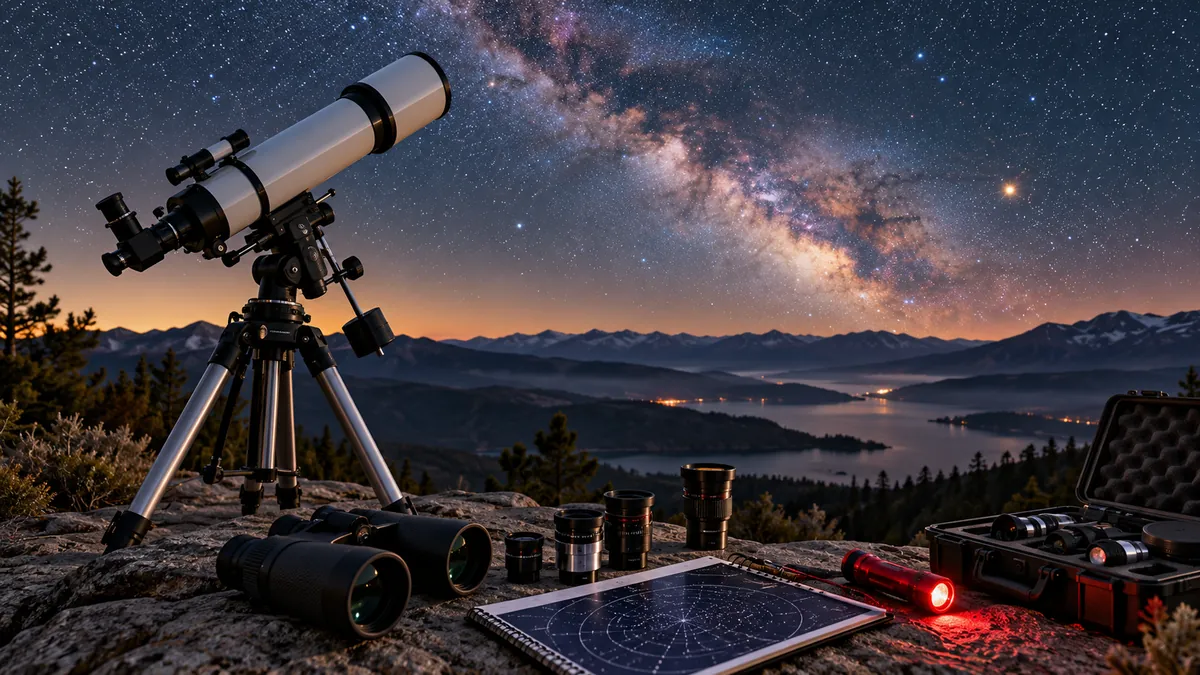
- Curious, no scope yet: astronomy binoculars, a planisphere and a red-light flashlight. It's a low-risk start they'll keep using.
- Ready for a first telescope: a Dobsonian or a small refractor on a steady mount. Size it for where they will really observe.
- Already owns a scope: one eyepiece that fills a real gap. Choose it after checking their focuser size and the set they already own.
- Stocking stuffer: a star atlas, an observing logbook or a red-light headlamp.
- Skip: any telescope sold on its magnification number, and "name a star" certificates.
First, work out which stargazer you're shopping for
Astronomy gifts get easier once you know which of four people you're buying for. Each one needs something different.
- The curious oneThey look up, use a sky app and own no gear. Binoculars and a planisphere teach the sky. A telescope can wait until they know what they want to see.
- The ready beginnerThey have been talking about getting a telescope. Choose one with them if you can, or include a gift receipt.
- The observerThey own a scope and use it. Buy accessories matched to that exact setup, not general "astronomy stuff."
- The imagerThey photograph the sky. Imaging gear has to fit the camera, telescope, mount and software, so plan the gift with them.
Gift ideas by budget and experience
We sort gifts by size instead of dollar amounts. Prices move daily from Black Friday through Cyber Monday, so a printed number would be out of date before you shop.
| Gift size | New or curious | Already owns a scope |
|---|---|---|
| Stocking stuffer | A planisphere made for their latitude, a red-light flashlight or headlamp, and a beginner's observing guide | An observing logbook, a Moon map, and cleaning supplies made for coated optics |
| Mid-size gift | Astronomy binoculars with a tripod adapter, and a star atlas | One quality eyepiece in their barrel size, a padded case, or an adjustable observing chair |
| Big gift | A tabletop or full-size Dobsonian, or a small refractor on a sturdy mount. For gadget lovers under city lights, a smart telescope. | A mount upgrade, a better finder, dew control or imaging accessories. Plan these together. |
A red light keeps their eyes adapted to the dark. A white flashlight resets that adaptation every time it's switched on.
What not to buy (and why)
- Magnification on the box. A telescope's magnification is its focal length divided by the eyepiece's focal length, so it changes with every eyepiece. The useful limit depends on aperture and how steady the air is. Sky-Watcher's rule of thumb is roughly 30–50x per inch of aperture. When a small scope advertises a huge number, it is advertising a blurry view.
- A shaky mount. If the view shakes every time they touch the focuser, the scope will stop getting used. A stable mount matters as much as the optics.
- A scope that doesn't fit their life. Picture the stairs, the balcony door and the car trunk. People use the scope that is easy to carry outside.
- Eyepieces chosen blind. Eyepieces have either 1.25-inch or 2-inch barrels. A focal length they already own adds nothing new.
- "Name a star" certificates. The International Astronomical Union says purchased star names "have no formal or official validity whatsoever." Give one for the sentiment if you like, but it is not an astronomy gift.
- Imaging gear as a surprise. Cameras, field flatteners and guiding gear must suit the telescope, the mount's capacity and the software they use.
Questions to answer quietly before you buy
You can find most of these answers from a photo or a casual question. You don't have to give away the surprise.
- Do they already own a telescope? Photograph the label on the tube or mount. It usually shows the brand, model, aperture and focal length.
- What size is the focuser? Find out whether their eyepieces slide into a 1.25-inch or a 2-inch barrel.
- Which eyepieces do they have? Each one has its focal length in millimeters printed on it. Note them all.
- Where do they observe? A balcony, a backyard or a drive to a dark site. That answer limits size and weight more than anything else.
- Are their skies bright or dark? Under city skies the Moon, planets and double stars are the best targets. Faint galaxies need darker skies.
- What excites them? Planets, deep-sky objects or photography. Each one leads to a different setup.
- How do they feel about setup? Some people enjoy star-hopping with a chart. Others want an app or a smart telescope to find targets for them.
The beginner vs. the astronomer who has everything
For a beginner, keep the stakes low. Good binoculars on a tripod show a lot: craters on the Moon, star clusters, and on steady nights Jupiter's brightest moons. If you go straight to a telescope, choose a simple design that sets up in minutes and include a gift receipt. A scope they use every clear night is worth more than a bigger one they never set up.
For the person with every eyepiece, don't guess at gear. Pay for a weekend at a dark-sky site, a local astronomy club membership, or a gift card to the dealer they already use. You could also spend an evening together running their eyepiece set through AstronomyEquipment.com's eyepiece calculator. It shows magnification, exit pupil and true field for each one, so you can see which gap is worth filling. If they're drifting toward photography, its imaging calculator checks whether a camera and telescope pairing makes sense before anyone buys.
Where to go next
AstronomyEquipment.com is the network's specialist for telescopes and stargazing. Its motto is "equipment before hype."
AstronomyEquipment.com
It has a telescope finder, explainers on each telescope design, and eyepiece and imaging calculators. Its telescope gift guide covers kids, beginners and apartment dwellers, plus people who already own a scope.
Shopping for someone who also loves outdoor optics? Read how to research metal detectors, scopes and outdoor optics.
Quick answers
Is a telescope a good gift for a beginner?
It can be, as long as it is easy to carry, sits on a steady mount and suits the place they will actually observe from. If you are not sure they will stick with it, start lower-risk with astronomy binoculars and a planisphere. A telescope can come later, once they know what they enjoy looking at.
How much magnification should a gift telescope have?
Ignore the number printed on the box. Magnification comes from the eyepiece, and aperture and air steadiness limit how much of it is useful. Sky-Watcher's rule of thumb is roughly 30–50x per inch of aperture. Aperture, mount stability and portability matter far more.
What do I buy someone who already owns a telescope?
Before buying any accessory, check their focuser size and the eyepieces they already own. One eyepiece that fills a real gap is a good gift. So are a padded case, an observing chair or a trip to a dark-sky site. All of them beat a guess.
Is a used telescope an acceptable gift?
It can be good value. Check the optics, how smoothly the mount moves and which accessories are included. AstronomyEquipment.com has a used telescope inspection checklist that covers those checks before you pay.
Editorial notice: BuyingGuide.co does not claim hands-on testing and does not quote prices, because holiday prices change daily. Confirm the exact model, seller, warranty and return terms on the final listing before buying. Links to our network sites or merchants may support this publication; no payment determines what we recommend. See our affiliate disclosure.